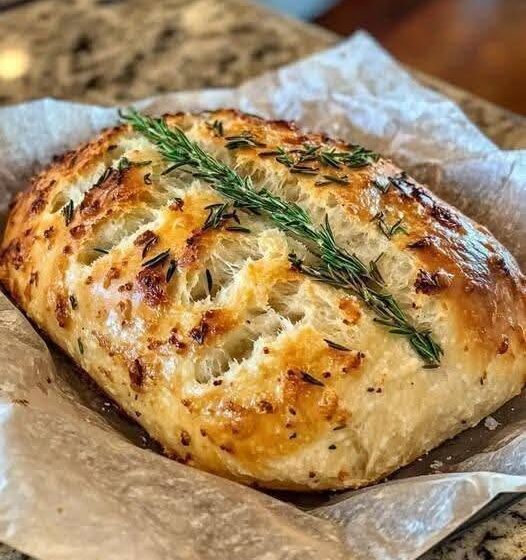
There is something truly special about pulling a freshly baked loaf of bread from the oven. The crackling crust, the irresistible aroma, and the soft interior create an experience that store-bought bread simply cannot match. If you enjoy homemade bread recipes and love the rich flavor of garlic, this Rustic No-Knead Sourdough Garlic Bread is a recipe worth adding to your collection.
Combining the natural tang of sourdough fermentation with the savory depth of roasted garlic, this easy artisan bread delivers bakery-quality results using simple ingredients and minimal hands-on effort. Unlike traditional bread recipes that require extensive kneading and complicated techniques, this no-knead method allows time and fermentation to do most of the work.
The result is a beautiful golden loaf with a crisp crust, airy crumb, and incredible flavor. Every slice offers a balance of earthy sourdough notes, aromatic garlic, and a chewy texture that bread enthusiasts appreciate.
Whether served alongside soup, pasta, roasted vegetables, salads, or enjoyed with a spread of butter, this homemade sourdough garlic bread fits perfectly into countless meals. It is equally suitable for family dinners, holiday gatherings, weekend baking projects, or entertaining guests.
For anyone looking to explore artisan bread baking without investing in complicated equipment, this recipe offers an approachable and rewarding introduction.
Why No-Knead Sourdough Bread Has Become So Popular
Over the last several years, homemade sourdough bread has experienced tremendous growth in popularity. Home bakers have discovered that traditional fermentation methods create bread with exceptional flavor, texture, and character.
At the same time, no-knead bread recipes have become favorites because they simplify the baking process while still delivering professional-quality results.
This combination of sourdough and no-knead techniques creates a recipe that offers:
- Rich artisan flavor
- Minimal effort
- Beautiful crust development
- Natural fermentation benefits
- Excellent texture
- Flexible preparation schedule
- Bakery-style appearance
- Homemade satisfaction
Many people are surprised to learn that excellent bread does not require constant kneading. Instead, allowing the dough to rest and ferment naturally develops structure and flavor over time.
What Makes Sourdough Bread Different?
Sourdough bread stands apart from conventional bread because it relies on natural fermentation rather than commercial yeast alone.
An active sourdough starter contains naturally occurring wild yeast and beneficial bacteria. These microorganisms slowly ferment the dough, creating the characteristic tangy flavor that sourdough is famous for.
The fermentation process also contributes to:
- Improved flavor complexity
- Better crust formation
- Enhanced texture
- Longer freshness
- Traditional artisan characteristics
Because the dough develops slowly, the finished loaf often possesses a depth of flavor that cannot be achieved through quick-rise bread recipes.
The Flavor Power of Garlic in Homemade Bread
Garlic has long been one of the most beloved ingredients in savory baking.
When incorporated into bread dough, garlic transforms a simple loaf into something extraordinary.
This recipe uses roasted or mashed garlic to create a rich, mellow flavor that spreads throughout the dough.
Unlike raw garlic, roasted garlic becomes sweeter and less aggressive during cooking. Its soft texture blends beautifully into the dough while contributing a subtle depth of flavor.
The result is a loaf that smells incredible while baking and tastes even better when sliced.
Why This Recipe Requires No Kneading
Traditional bread-making often involves kneading to develop gluten.
This recipe takes a different approach.
Rather than manually kneading, the dough develops structure through hydration and fermentation.
As the dough rests:
- Flour absorbs moisture
- Gluten forms naturally
- Fermentation creates air pockets
- Flavor develops gradually
This slower process produces a loaf with an open crumb and artisan-style texture.
The simplicity of no-knead bread is one reason it continues to rank among the most popular homemade bread recipes online.
Understanding the Key Ingredients
Every ingredient plays an important role in creating the final loaf.
Active Sourdough Starter
The sourdough starter serves as the heart of the recipe.
A healthy, bubbly starter provides:
- Natural leavening
- Tangy flavor
- Fermentation activity
- Texture development
For best results, use a starter that has recently been fed and is actively rising.
All-Purpose Flour
Flour forms the structure of the bread.
All-purpose flour works exceptionally well because it creates a tender crumb while still developing enough gluten to support the loaf.
Its versatility makes it an excellent choice for home bakers.
Warm Water
Water hydrates the flour and activates fermentation.
The correct amount of water creates a dough that remains soft and slightly sticky, helping produce the open texture associated with artisan bread.
Salt
Salt does more than season bread.
It also helps:
- Strengthen gluten structure
- Regulate fermentation
- Improve overall flavor
- Enhance crust development
Without salt, bread often tastes flat and lacks complexity.
Olive Oil
Olive oil contributes richness and softness.
Benefits include:
- Improved texture
- Enhanced flavor
- Moist crumb
- Better shelf life
Its subtle flavor pairs perfectly with roasted garlic.
Garlic Cloves
Garlic serves as the signature ingredient.
When roasted and mashed, garlic creates:
- Savory depth
- Aromatic richness
- Balanced sweetness
- Distinctive flavor profile
The six cloves used in this recipe provide noticeable flavor without overwhelming the sourdough.
Butter
Brushing butter over the finished loaf creates:
- Extra richness
- Beautiful shine
- Enhanced garlic flavor
- Softer crust surface
Warm bread brushed with butter is especially irresistible.
Fresh Parsley
Although optional, parsley adds:
- Color contrast
- Fresh herbal notes
- Restaurant-style presentation
A sprinkle of parsley immediately before serving brightens the loaf visually.
Parmesan Cheese
Parmesan introduces:
- Savory umami flavor
- Richness
- Golden finish
This optional ingredient creates an extra layer of complexity that complements the garlic beautifully.
Why Roasted Garlic Produces Superior Flavor
Many bread recipes use raw garlic, but roasting transforms garlic into something remarkable.
During roasting:
- Sharp flavors mellow
- Natural sugars caramelize
- Texture softens
- Sweetness develops
This creates a richer and more balanced flavor profile.
To roast garlic:
- Peel the cloves.
- Drizzle lightly with olive oil.
- Wrap in foil.
- Bake until soft and golden.
- Mash into a smooth paste.
This garlic paste blends effortlessly into the dough.
The Importance of Bulk Fermentation
One of the most critical stages of sourdough baking is bulk fermentation.
This resting period allows the dough to develop:
- Structure
- Flavor
- Volume
- Air pockets
During fermentation, natural yeast consumes sugars and releases gas.
These gases become trapped within the dough, creating the airy texture associated with artisan bread.
Patience during this stage is rewarded with superior results.
How to Shape the Dough Successfully
After fermentation, the dough should be handled gently.
Overworking the dough can release valuable air pockets.
When shaping:
- Lightly flour your surface
- Fold dough toward the center
- Create tension on the exterior
- Form a round or oval loaf
The goal is to preserve as much internal structure as possible.
Why a Dutch Oven Creates Bakery-Style Results
Many artisan bakers use Dutch ovens because they trap steam during baking.
Steam helps:
- Create a crisp crust
- Encourage oven spring
- Improve texture
- Produce professional results
If a Dutch oven is unavailable, a baking stone or heavy baking sheet can also be used.
Serving Ideas for Sourdough Garlic Bread
This versatile loaf complements many meals.
Popular serving suggestions include:
Soup Companion
Pair with:
- Tomato soup
- Vegetable soup
- Potato soup
- Lentil soup
Pasta Side Dish
Serve alongside:
- Spaghetti
- Alfredo pasta
- Lasagna
- Baked pasta dishes
Salad Pairing
The bread balances fresh salads beautifully.
Appetizer Board
Slice and serve with:
- Butter
- Olive oil
- Cheese
- Roasted vegetables
Sandwich Base
Use thick slices for gourmet sandwiches.
Tips for Achieving the Best Texture
Use an Active Starter
A sluggish starter can result in dense bread.
Measure Ingredients Carefully
Accurate measurements improve consistency.
Avoid Excess Flour
Too much flour can reduce hydration and create a dry loaf.
Allow Proper Fermentation
Under-fermented dough lacks flavor and volume.
Preheat Thoroughly
A fully heated oven promotes better oven spring.
Common Mistakes to Avoid
Using an Inactive Starter
Always confirm your starter is bubbly and active.
Rushing Fermentation
Good sourdough requires time.
Overworking the Dough
Gentle handling preserves structure.
Skipping Steam
Steam helps create the signature crust.
Cutting Too Soon
Allow bread to cool before slicing.
This prevents texture issues and allows moisture to redistribute.
Storage Recommendations
Room Temperature
Store in a bread bag or airtight container for up to three days.
Freezing
Slice and freeze for longer storage.
Reheating
Warm slices briefly in the oven for fresh-baked flavor.
Nutritional Highlights
This bread contains simple ingredients and naturally fermented dough.
Potential benefits include:
- Natural fermentation
- No commercial preservatives
- Complex carbohydrates
- Flavorful ingredients
- Homemade quality
The addition of garlic also contributes natural aromatic compounds that enhance flavor.
Why This Recipe Belongs in Your Bread-Baking Collection
Few homemade bread recipes offer the same combination of simplicity and flavor as this Rustic No-Knead Sourdough Garlic Bread.
It combines:
- Artisan appearance
- Crispy golden crust
- Soft interior texture
- Rich garlic flavor
- Natural sourdough tang
- Minimal hands-on work
Whether you’re an experienced baker or trying sourdough for the first time, this recipe delivers rewarding results with surprisingly little effort.
The combination of fermentation, roasted garlic, olive oil, and optional Parmesan creates a loaf that feels special enough for guests while remaining simple enough for everyday enjoyment.
Once you experience the aroma of this bread baking in your kitchen, it will likely become one of your most frequently requested homemade bread recipes.
Part 2: Simple Recipe Card
Rustic No-Knead Sourdough Garlic Bread
Recipe Information
Prep Time: 20 Minutes
Fermentation Time: 8–12 Hours
Bake Time: 40–45 Minutes
Total Time: Approximately 10–13 Hours
Servings: 1 Large Loaf
Ingredients
For the Bread Dough
- 100 grams active and bubbly sourdough starter
- 400 grams all-purpose flour
- 280 milliliters warm water
- 8 grams salt (about 1½ teaspoons)
- 2 tablespoons olive oil
- 6 large garlic cloves
For Finishing
- 2 tablespoons butter, melted
- 1 tablespoon fresh parsley, finely chopped (optional)
- 2 tablespoons grated Parmesan cheese (optional)
Instructions
Step 1: Roast the Garlic
Peel the garlic cloves and drizzle with a little olive oil. Wrap in foil and roast at 180°C (350°F) for about 20 minutes until soft and lightly golden. Mash into a smooth paste.
Step 2: Mix the Dough
In a large bowl, combine flour and salt.
Add:
- Active sourdough starter
- Warm water
- Olive oil
- Roasted garlic paste
Mix until a sticky dough forms and no dry flour remains.
Step 3: First Rise (Bulk Fermentation)
Cover the bowl with a clean towel or plastic wrap.
Allow the dough to rest at room temperature for 8–12 hours, or until noticeably puffed and airy.
Step 4: Shape the Dough
Transfer dough onto a lightly floured surface.
Gently shape into a round loaf without deflating the dough excessively.
Step 5: Final Rest
Place the shaped dough into a proofing basket or bowl lined with a floured towel.
Let it rest for 1–2 hours.
Step 6: Preheat the Oven
Preheat oven to 230°C (450°F).
If using a Dutch oven, place it inside the oven while preheating.
Step 7: Bake
Carefully transfer dough into the hot Dutch oven.
Cover and bake for 30 minutes.
Remove the lid and continue baking for 10–15 minutes until deeply golden and crusty.
Step 8: Finish and Serve
Brush warm bread with melted butter.
Sprinkle with chopped parsley and Parmesan cheese if desired.
Allow to cool slightly before slicing.
Serving Suggestions
- With soups and stews
- Alongside pasta dishes
- As a dinner bread basket
- For sandwiches
- With herb butter or olive oil
Storage
- Store covered at room temperature for up to 3 days.
- Freeze sliced bread for up to 2 months.
- Reheat in the oven for best texture.
Quick Tips
- Use a recently fed starter.
- Roast garlic for a sweeter flavor.
- Avoid adding too much flour.
- Let fermentation happen naturally.
- Cool before slicing for the best crumb texture.